THE INTERCESSORY ROLE OF THE BLESSED VIRGIN MARY IN THE CHURCH’S EVANGELICAL MISSION – Fr Michael OGBOR
THE INTERCESSORY ROLE OF THE BLESSED VIRGIN MARY IN THE CHURCH’S EVANGELICAL MISSION
By: Rev. Fr Michael Ovodoroye OGBOR
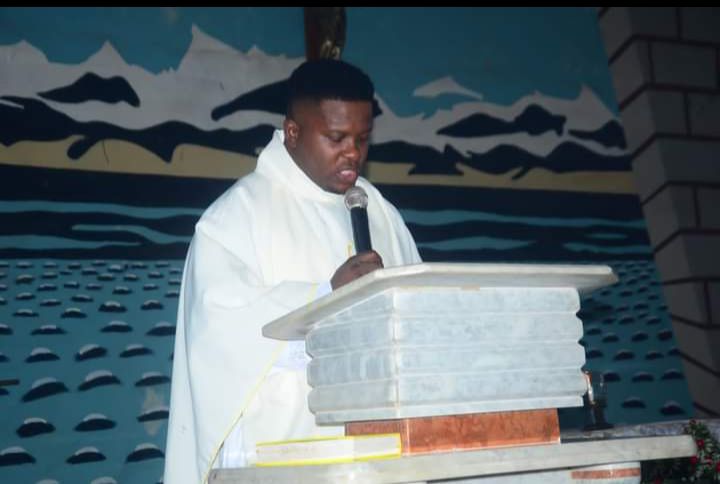
(A paper presented on the occasion of the Diocesan Marian Pilgrimage held at Patani, Delta State, Nigeria on Thursday, 30 April 2026)
INTRODUCTION
I want to begin this lecture with some personal questions.
Why are you here? Why have you left behind your homes, your jobs or businesses on a weekday to be here? Why have you made these sacrifices despite the current insecurities in our country; the bad poor roads and the high cost of transportation due to the increase in the price of premium motor spirit, popularly known as fuel? What really is the essence of our gathering here today – is it merely a ritual or a tradition or to just fulfill all righteousness as Catholics in this diocese?
The truth is: we have all gathered here today as a family and as a Church, both particular and domestic, to honor our Mother and to seek her intercession because we believe in her intercessory powers. The Letter of St James tells us that “the prayers of a righteous man availeth much” (James 5:6) and there is no human being, apart from our Lord Jesus Christ, who is truly God and truly man, that is as righteous and as holy as the Immaculate Blessed Virgin Mary – the Mother of God – who alone was specially created by God as His masterpiece and the medium through which God became human and bring us salvation.
We have gathered here in faith and hope in God and in the maternal role the Blessed Virgin Mary played and is still playing for our salvation and the spread of the gospel in the entire world and in particular way, in our diocese. We firmly believe as Catholics that with her intercession, our prayers and intentions for this pilgrimage will never be made in vain.
And by Divine Providence, since we are about to celebrate the Evangelization Week, this lecture that is titled “The Intercessory Role of the Blessed Virgin Mary in the Church’s Evangelical Mission” is apt in rekindling us with apostolic zeal after the model of the Blessed Virgin who visited Elizabeth and in reminding us that no matter how difficulty the mission gets or how difficulty life becomes, we have never alone – for we have a mother, so tender and loving, who will always intercede for us in a way higher than the saints and who will always encourage us on with the multitudes of the saints in heaven (Hebrew 12:1).
AN OVERVIEW OF THE CHURCH AND ITS EVANGELICAL MISSION
Etymology of the term “Church”
The English term ‘Church’ is from the German term ‘kirika’ but this was a derivation of the Greek term ‘Kuriake’ which means “of the Lord.” Biblically, in the New Testament, the term ‘Church’ is derived from the Greek term ‘Ekklesia’ as used in Matthew 16:18 and 18:17. Originally, this term ‘Ekklesia’ originated from Athens in Greece and it means “called out” and it was used to describe exclusively the privileged assembly of free citizens of the city called together for discussion. However, the early Christians used the term ‘Ekklesia’ to describe their liturgical gatherings because they saw themselves, irrespective of social status, race or background, as the privilege and chosen people called out by God in Jesus Christ for the special purpose of becoming members of his household(1Pet 2:9, Eph 2:19). Interestingly, the term ‘Ekklesia’ is also the translation of the Hebrew term ‘Qahal’ which means “the assembly of the people of God” (Deut 9:10). In this, when the early Christians used the term ‘Ekklesia’, they saw themselves as the people of God, the new Israel that God has called into a new covenanted relationship in Christ.
Origin and Nature of the Church
The Church has its origin in the eternal purposes of God. It is the new covenant community founded by our Lord Jesus as the new Israel and inaugurated by the Holy Spirit. The Church is the people of God, chosen by the Father, and graciously brought into a relationship with the triune God and with one another. The Church is the redeemed communion of saints, bought by the blood of Christ, universal and invisible, incorporating all believers throughout all ages – those on earth, those in heaven and those in purgatory. The Church is the adopted family of God. The Church also is the body of Christ, having Christ as head and we are his members of his body. Furthermore, the Church is the bride of Christ, particularly loved by him and saved by his sacrificial work on the cross. The Church is also the temple of the Spirit, filled with the fullness of Christ, marked by God’s presence. The Church is the new Israel with the twelve Apostles as its new Patriarchs. And lastly, the Church is the Kingdom of God in this world and in the world to come. According to the Dogmatic Constitution on the Church, “the Church, in Christ, is in the nature of sacrament – a sign and instrument, that is, of communion with God and of unity among all men.” (Lumen Gentium 1).
The Evangelical Mission of the Church
In a simple sense, the term ‘evangelical’ is derived from the koine Greek word ‘euangelion’ which means ‘gospel or good news’ in reference to the message of salvation through Jesus Christ. While the term ‘mission’ is derived from the Latin term ‘missio’ which means ‘the act of sending.’ Although the term ‘mission’ has a Latin origin and does not appear in most English bibles, it is still a biblical word. According to Eckhard Schnabel, “The argument that the word mission does not occur in the New Testament is incorrect. The Latin verb mittere corresponds to the Greek verb apostellein, which occurs 136 times in the New Testament (97 times in the Gospels, used both for Jesus having been “sent” by God and for the Twelve being “sent” by Jesus)” (Eckhard J. Schnabel, 2008, p. 28). The mission of the Church is rooted in the Blessed Trinity. It is the Father that origin of all missions. He sent the Son and at the end of the Son’s earthly ministry and mission, both the Father and the Son sent the Holy Spirit to be with the Church and to guide the church as the living memory and the soul of the Church. In this, our Lord Jesus is the first missionary sent by the Father and in Luke 4:18, our Lord gave his mission statement. The sending of our Lord Jesus Christ by the Father is still the essential mission (Andreas J. Kostenberger and Peter T. O’Brien, 2009, p. 200).
During his earthly ministry and mission, he gathered his apostles and disciples and before the ascension, at the Great Commissioning, gave the Church the mission to preach the gospel or the good news “and make disciples of all nations, baptizing them in the name of the Father and of the Son and of Holy Spirit and teaching them to obey everything I have commanded you.” (Matt 28:19 -20). Put differently, “The mission of the church is to go into the world and make disciples by declaring the gospel of Jesus Christ in the power of the Holy Spirit and gathering these disciples into churches, that they might worship the Lord and obey his commands now and in eternity to the glory of God the Father” (Kevin DeYoung and Greg Gilbert, 2001, p. 62). In Evangelii Nuntiandi, no. 14, Pope Paul VI succinctly the evangelical mission of the Church when he wrote: “We wish to confirm once more that the task of evangelizing all people constitutes the essential mission of the Church. It is a task and mission which the vast and profound changes of present-day society make all the urgent. Evangelizing is in fact the grace and vocation proper to the Church, her deepest identity. She exists to evangelize, that is to say, in order to preach and teach, to be the channel of the gift of grace, to reconcile sinners with God, and to perpetuate Christ’s sacrifice in the Mass, which is the memorial of His death and glorious resurrection.”
The Second Vatican Council teaches that this evangelizing role is filled, not only by bishops, priests, and religious but rather by every baptized Christian. All share in the evangelizing mission. Yet, the laity especially are called to be “leaven and salt” in the world, infusing its structures and practices with the spirit of the Gospel (cf Lumen Gentium, 31-33). This is a role which can be led and promoted by bishops and priests, but it is a responsibility which falls most appropriately to the laity. The voices of bishops and priests in the pulpits are heard by a few. But the voice of our Christian laity in our society; provided these voices are properly evangelized and well-catechized themselves, are a force for good, a force for the spread of the Gospel, which is largely untapped in our diocese. Most at times, the work of evangelizing is left for the clergy and a selected few laity members instead of everyone participating actively. The laity needs to be properly trained and catechized for the mission – they cannot give what they do not have.
As a diocese, we still have a long way to go in evangelizing and bringing to Christ’s sheepfold – the Church – those who are have not known Christ or are not living in his light. Out of a population of over million plus, we are only about sixty thousand Catholics – about two percent of the entire population. But we shall never be discouraged. Our Lady of the Waters is still with us and this diocese is dedicated to her maternal patronage.
THE INTERCESSORY ROLE OF THE BLESSED VIRGIN MARY IN THE CHURCH’S EVANGELICAL MISSION
Having clarified the definition, nature and origin of the Church, her universal evangelical mission and the mission of our diocese, we shall now look at the intercessory role of the Blessed Virgin Mary in the Church’s evangelical mission.
There is no denying the fact that there is great power in the intercession of the Blessed Virgin Mary. But we shall be looking at her intercessory role from the different roles she plays in salvation history and in the Kingdom of God – the Church – as seen in the Bible.
Mary’s Intercessory Role as the Mother of God
The power of Mary’s intercession stems from her Divine Motherhood. Mary is the Mother of God precisely because Jesus Christ, her Son, is God. Even before her pregnancy was obvious, Elizabeth, under the inspiration of the Holy Spirit, addressed her as the Mother of my Lord (the Mother of Adonai). And when Mary gave birth, she did not give birth to a nature, or even two natures. The title “Mother of God” (Theotokos) for Mary was confirmed by the First Council of Ephesus, held at the Church of Mary in 431A.D. The Council decreed that Mary is the Mother of God because her son Jesus is one person who is both God and man, divine and human.
We see the power of Mary’s intercessory as the Mother of God at the Wedding Feast of Cana in John 2:1-11. The wine had run out, the couples were tensed and frustrated but as a sensitive and tender mother, the Blessed Virgin Mary interceded on behalf of the couple to her son and the miracle of turning water into wine became a reality. This miracle is a double miracle because it also resulted to the miracle of faith in the disciples who had accompanied Jesus.
It is safe to say that our Blessed Mother did not only see the shame of the couple but also the uncertainties and doubts in the disciples about the divinity of her son and so, her intercession for wine resulted to the gift of faith for the disciples to follow and obey Jesus and become member of his Church.
Like she did for the first disciples of the Lord, she keeps on doing through her different apparitions and messages of hope, peace and repentance. And whenever we pray and meditate on the mysteries of the Rosary, she intercedes for an increase in our faith. And she is always ready to intercede for us even when we are down, fearful, frustrated and even in despair because our wine runs out.
Mary’s Intercessory Role as the Mother of the Church
The Blessed Virgin Mary as the Mother of God is also the Mother of the Church. The logic is simple – Christ her son is the head of the Church and the Church is his mystical body and as the Mother of the head, she is also the Mother of the entire mystical body that comprises the triumphant Church in heaven, the Suffering Church in purgatory and the Pilgrimage Church on earth. In the Gospel of John 19:26-27, our Lord entrusted the Church, represented by John the Beloved, to our Blessed Mother. And like the mother hen that gather her brood under her wings, the Blessed Virgin Mary as the Mother of the Church gathered the Apostles together and interceded on behalf of them to her Son and her Spouse for the outpouring of the Holy Spirit (Acts 1:14). She is full of grace, without sin and was already overshadowed by the Holy Spirit and conceived the God-man in her womb. However, she prayed with and for the Apostles, representing the Church, for the Holy Spirit to launch or birth the Church officially into the world for its mission on the day of Pentecost. In this, it is safe to say that Mary’s intercession for the Apostles on the Day of Pentecost was instrumental in the birth of the Church. She is the Mother of the Church and the Church is her substituted child and she will always tend to the needs and the growth of the Church in this world, in spreading the gospel.
Mary’s Intercessory Role as the Gebirah of God’s kingdom
The Hebrew title ‘Gebirah’ means ‘Great Lady or Queen’ and it is attributed to the office of the Queen Mother of the Davidic kingdom. This title was never used to describe the wife of any Israelite king. Biblically, King Solomon established the office and tradition of the Gebirah or Queen Mother because he married many wives and as it was the custom of kings to have many wives, each successive Davidic king made his Mother the Queen Mother. The Queen Mother, though not the wife of the king but his own mother, rules together with her son as the queen of his kingdom, as his counselor and as an advocate for the people. In 1King chapter two, King Solomon made a throne at his right hand for his mother – the queen mother and the queen of his kingdom. And when his mother Bathsheba came in to intercede for Adonijah, the King told her “Make your request, Mother, for I will not refuse you” (1 Kings 2:20).
Although after the Babylonian Exile, the Davidic dynasty physically came to an end, in the kingdom of Christ, Mary his Mother is the Queen Mother and the Queen of that Kingdom. She is the Gebirah. She is the ‘Great Lady or Woman’ prophesied about in the Genesis 3:15 whose son will bring salvation to humanity. She is the same Woman Isaiah prophesied about in Isaiah 7:14 who will conceive and give birth to the future Davidic king that will be Immanuel – God with us.
In Matthew 1–2, Mary is portrayed in the queen-mother tradition. Matthew examines Mary’s position alongside her royal Son when the magi pay Him homage (Matt 2:11). As mentioned above, this scene involves a number of Davidic kingdom themes: Jesus is called the “king of the Jews” (2:2). The star guiding the magi recalls the star in Balaam’s oracle about the royal scepter rising out of Israel (Num 24:17). The narrative centers on the city of Bethlehem, where David was born (1 Sam 17:12) and out of which the future Davidic King would come (Mic 5:2). And the magi bringing gifts and paying the child Jesus homage recall the royal Psalm 72:10–11 (cf. Is 60:6). Within this Davidic kingdom context, Matthew singles out Mary as being with the child when the three magi come to honor the newborn King. In the act of adoration of the magi, St. Matthew, a good expert on the Davidic traditions, thinking of the readers of his gospel, does not omit the significant detail of showing ‘the child with Mary, his mother.’ In this way, he associates and confirms Mary as the gebirah of the messianic kingdom. Moreover, it is she who enthrones and presents the king-Messiah to the adoration of the magi, exercising one of the specific missions of the gebirah.
As the Gebirah of the Messianic kingdom, Mary’s intercession is very powerful and her son, Christ the King, will never refuses her because she is the queen of his kingdom. At the wedding feast of Cana, even our Lord Jesus Christ did not want to perform the miracle because his hour has not yet come, but for her request, he performed the miracle.
And with that, we see clearly that just like the Israelite kings of old, Jesus won’t refuse his mother. Like Solomon in the Old Testament, Jesus will do whatever she asks. However, we have to be careful here. Praying to Mary is not magic, so we should not expect everything we ask through her to be done for us. God will not grant our requests, if he has something better in mind, and Mary’s intercession is not a loophole to get around that. Mary is on the same spiritual wavelength as her son, so if he knows that not granting a request would be better for our eternal salvation, so does she. Consequently, when we pray to Mary, we cannot expect a 100% success rate from our limited perspective. Nevertheless, she is a powerful intercessor with her son, the most powerful one there is, and we should take advantage of that intercession as often as we can.
Mary’s Intercessory Role as the Mother of all Christians
As the Gebirah of Christ’s Kingdom, the Blessed Virgin Mary is also the Mother of all Christians – including those who are in communion with the Church, those who are Protestants, whether they acknowledge her or not and those who are anonymous Christians whose faith and devotion are known to God alone. The Woman of the apocalypse in Revelation 12:1–3 is a foresight to the Virgin Mary, both the mother of God and the mother of church.
If not for the partitioning of the Bible into different chapters and verses, the story of Revelation chapter 12 actually begins from Revelation chapter 11: 19 where the temple of God was opened and the Ark of the Covenant was seen with flashes of lightning, thunder, earthquake and severe hailstorm. And when John explained the Ark, he saw the Ark as a pregnant woman clothed with sun, with the moon under her feet and a crown of twelve stars on her head. This woman is the Blessed Virgin Mary and her son is our Lord Jesus Christ. This story mirrored the infancy narrative in the gospels and thus, the dragon – the devil – also mirrored Herod. The devil could not conquer our Lord even in death as he rose and ascended; nor could he conquer the Blessed Virgin Mary in death – for she was assumed into heaven and crowned as the Queen Mother or Queen of heaven. Mary’s assumption into heaven does not mean that she no longer intercede for; rather it means that she is now praying for us as the Queen of heaven (Regina Caeli) – the highest position in the communion of the saints.
Pope Pius X explicitly identified the “woman” of the Revelation with the Virgin in his encyclical Ad diem illum. Pope Benedict XVI also made this identification several times, associating the “crown of twelve stars” with Mary’s authority among the saints. Hence, the honor given to her is the hyper dulia. But after the dragon could not conquer the Son of Mary, our Lord Jesus Christ nor Mary herself, he went to wage war against her other offspring – those who keep God’s commands and hold fast their testimony about Jesus.
So, the devil is always there like a thief to steal, to kill and to destroy but we have a mother who is unconquerable and a great intercessor praying for us to be able to resist the devil. And we can do so more easily if we obey her simple command of doing whatever her son ask out us (John 2:5).
TRUST IN MARY’S INTERCESSION AND MATERNAL PATRONAGE
From all that has been said, we need to trust in Mary’s intercession and maternal patronage. No human being knows her son like she do. And no human being can ever love her son more than her and her son loves her and will always grant her requests. Even in our human setting, one of the easiest way people usually get to the king or politician or a rich or famous person through their mothers. We can all approach God directly but it is better to approach him with Mary as an intercessor – for sometimes we might not know how to ask but she knows how to present it to her son to his eternal Father on our behalf. In this, the importance of Mary’s intercessory role for us, for Church and her mission cannot be overemphasized. The mission of the Church is a continuation of the mission of her son our Lord Jesus Christ and all of us Christians, who are called as Ekklesia and are sent on this evangelical mission, are her children. The Church is the kingdom of her son and she is the Gebirah or Queen Mother of that kingdom and her intercession for the growth and spread of this kingdom is of great effects.
Our diocese – the particular Church – with all her challenges for the missions is still under her maternal protection and she will always that we succeed in this great task of evangelizing so vast a territory with our little number that is about only two percent of the total population. She did it with the apostles and helped strengthen their faith in the wedding feast of Cana and in the upper room for the outpouring of the Holy Spirit in officially inaugurating the Church and her evangelical missions.
This diocese is dedicated to her maternal protection and she who is the Our Lady of the Waters will always pray for our safety on the waterways and highways as we embark on the task of evangelization. The title ‘Our Lady of the Waters’ from the scripture perspectives also means “the Blessed Virgin Mary is our Queen and the Mother of all people in this land.” The argument is simple – water in the scriptures represents peoples, languages and nations (Rev 17:15) and by being the Mother of God and the Mother of the Church, she is our mother and queen too. The apparition of 27th April 2017 and subsequent canonical erection of our diocese in the same year are testaments of her maternal intercessions for us and the evangelical mission in this diocese
CONCLUSION
We are all members of the Body of Christ and of his Kingdom but we have a mandate, not the mandate of Tinubu on which people are standing for their selfish interests; but the mandate of Christ our King to total alliance to him and to evangelize the world through our actions and words. Evangelization must begin from us and we must preach the good news to ourselves and rediscover the joy of the gospel before we can carry it to others as we cannot give what we do not have. Put differently, we need to first encounter Jesus, recognize him and believe in him first as the disciples did at the wedding feast of Cana before we can truly be his disciples and his witnesses. For if we are not convinced of his identity, we cannot be convinced of his mission. And our Blessed Mother is always there to intercede for us for the mission of the Church is a nothing but a continuation of the mission of her Son and we all are her children.
In this forthcoming week of Evangelization, be active in it and know that task of evangelization is not meant for the bishop, priests, reverend sisters alone but for each and every one of us who have been called by God through Christ into his Ekklesia as the people of God and of his kingdom. We all have a duty to be part of the Church’s evangelical mission in our diocese, in our different parishes, in our stations and hometowns, in our families and among our friends, in our offices and business places. Be active in the mission and do not be afraid.
I know the mission in our diocese might be a tough one as we besiege with many challenges ranging from poverty or lack of financial resources, no accessible roads in many parts, high rate of illiteracy and paganism, governmental negligence of most riverine communities and so on. But still of complaining, let us entrust the mission to her maternal patronage and seek her intercession and ask her to teach us how to truly love her son and obey whatever he tells us.
And I know also that many of us are in the survival mode and are passing through a lot and a lot is passing through us and perhaps, some of us might be at the point of giving up due to one challenge or crisis. The wines in some of us – our prayer, vocations, marriages, health and profession – have run dry or are running dry. We might have become a shadow of ourselves with a lot of questions and worries. But the good news for us at this Pilgrimage is that we are never alone and that God is not yet done with our stories and that we have sensitive Mother, Mother Queen and Queen who is always interceding for us. Never get tired of praying the Rosary for there is great power in Mary’s intercession.
So, we ask her help and intercession for the mission and for ourselves as we fly to her patronage…